

29 Jul Thatched Roofing Services Installation, Repairs, Re-Ridging and Re-Thatching
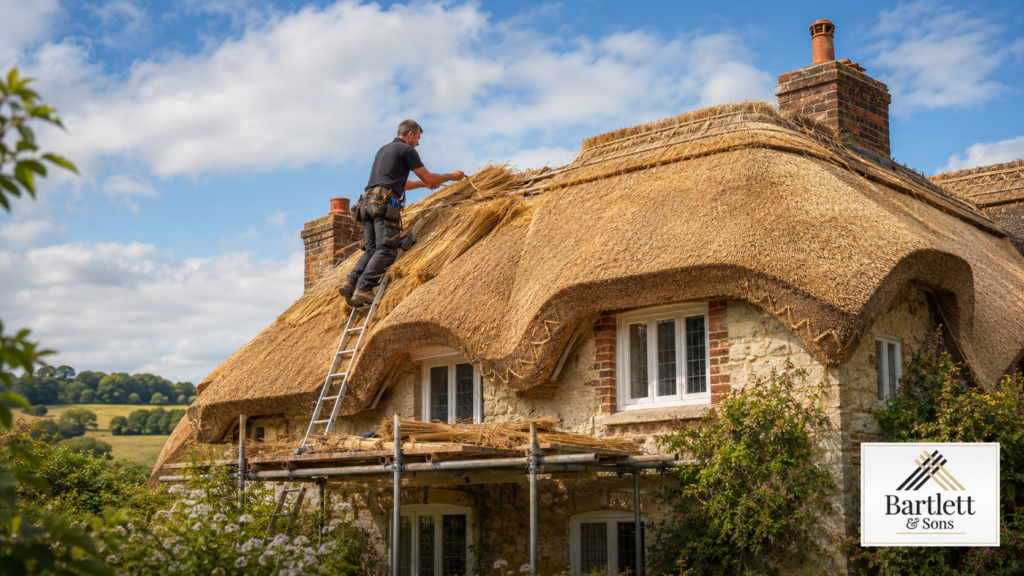
A professionally thatched roof gives a property warmth, character and a distinctive appearance that is difficult to reproduce with conventional roofing materials. From historic cottages and listed buildings to new-build homes, extensions, porches and garden structures, thatch can complement many different types of property.
However, a thatched roof is also a carefully constructed weatherproof system. Its performance depends on the quality of the materials, the skill of the thatcher and regular maintenance throughout its life. Understanding the different thatching services available can help property owners identify problems early and make informed decisions about repairs or replacement.
Bartlett & Sons undertakes professional thatching work throughout Hampshire, Wiltshire and Dorset, including new installations, roof repairs, re-ridging and complete re-thatching.
What Is a Thatched Roof?
A thatched roof is formed from layers of natural material arranged and fixed to create a durable, weather-resistant covering. Common materials include water reed, combed wheat reed and long straw. Each has its own appearance, preparation method and traditional regional associations.
The outer ends of the material are exposed to the weather, while the tightly packed layers beneath direct rainwater down the roof and away from the building. A suitable roof pitch is essential because it allows water to run off efficiently and helps the thatch dry naturally after rainfall.
Although thatch is a traditional roofing method, its installation requires detailed technical knowledge. The roof must be constructed with the correct depth, fixings, pitch, ridging and finishing to provide dependable protection.
New Thatched Roof Installations
Thatch is not limited to the restoration of old cottages. It can also be installed on new-build properties and extensions where the design and roof structure are suitable.
The process should be considered during the early planning stages. Roof pitch, timber construction, chimney design, ventilation, fire precautions and local planning requirements may all influence the project. Some properties may also be subject to listed building controls or conservation area restrictions.
A new thatched roof can provide:
- A distinctive handcrafted appearance
- Natural texture that blends with rural surroundings
- Excellent character for traditional architecture
- Design flexibility for ridges, curves and roof features
- A sympathetic covering for extensions to thatched homes
- Natural insulating properties
The choice of thatching material should take account of the property’s design, location, exposure and any planning conditions. An experienced thatcher can advise on a suitable approach before work begins.
Thatched Roof Repairs
Not every damaged thatched roof requires complete replacement. Where the main covering remains in serviceable condition, targeted repairs may extend its useful life and help prevent water from reaching the roof structure.
Damage can occur because of natural weathering, storms, birds, vermin, overhanging branches or deterioration around roof features. Problems may be limited to one elevation, particularly where that side receives greater exposure to wind, rain or limited sunlight.
Common thatched roof repairs include:
- Filling localised holes or thin areas
- Repairing damaged eaves and verges
- Replacing loose or displaced material
- Addressing bird or animal damage
- Repairing areas around chimneys and valleys
- Renewing defective wire netting
- Making good damaged decorative features
- Correcting localised water channels
Prompt attention is important. A small open or weakened area can allow further erosion and may eventually result in internal dampness or damage to supporting timbers.
Signs That a Thatched Roof Needs Attention
Changes in the roof’s appearance can provide useful indications of its condition. Property owners should look for visible thinning, uneven surfaces, loose ridging and deep channels formed by rainwater.
Other warning signs include:
- Fixings becoming visible on the roof surface
- Dark, damp or persistently mossy areas
- Material falling from the roof
- Holes caused by birds or vermin
- Deterioration around the chimney
- Damage following severe weather
- Water staining on internal ceilings
- Sections of ridge lifting or breaking away
- Eaves becoming thin or untidy
A roof does not always deteriorate evenly. One section may need repair while another remains in good condition. A professional inspection can establish whether local repair, re-ridging or a full re-thatch is the most appropriate solution.
What Is Re-Ridging?
The ridge is the uppermost section where the roof slopes meet. It has greater exposure than much of the main coatwork and is usually expected to require renewal sooner.
Re-ridging involves removing worn ridge material and installing a new ridge over the existing roof covering. It restores weather protection at the roof’s highest point and can significantly improve the overall appearance of the property.
A ridge may be finished in a plain, flush or decorative style, depending on the building and the homeowner’s preference. Decorative patterns can include scalloped or block-cut details, but the design should remain suitable for the roof’s construction and character.
Re-ridging also provides an opportunity to inspect nearby areas and complete minor repairs before the new ridge is fitted.
When Is Full Re-Thatching Required?
A complete re-thatch may be necessary when the main roof covering has reached the end of its practical service life or has deteriorated too extensively for local repairs to provide a reliable result.
Signs that full re-thatching may be required include widespread thinning, repeated leaks, exposed fixings, deep erosion and extensive decay across several areas. The condition of the underlying layers and roof timbers must also be considered.
During re-thatching, worn material is removed as required and the roof structure is inspected. Necessary timber repairs can then be completed before the new thatch is applied. The amount of existing material retained will depend on the roof, the thatching method and any conservation requirements.
Full re-thatching is a substantial investment, but correctly completed work restores the roof’s protection and traditional appearance for many years.
Thatching for Porches, Walls and Gazebos
Smaller structures can also benefit from handcrafted thatch. A thatched porch can create an attractive entrance and connect a modern addition with the character of the main building.
Thatched gazebos provide sheltered outdoor spaces with a natural appearance suited to gardens, pubs, hotels and hospitality venues. Thatch may also be used as a decorative and protective capping for suitable boundary walls.
Even on smaller projects, correct pitch, drainage and fixing methods remain essential. The structure must be designed to support the thatch and allow rainwater to run away effectively.
Caring for a Thatched Roof
Routine observation and timely maintenance can help maximise the life of a thatched roof. Gutters, where fitted, should remain clear, while nearby trees may need to be managed to prevent branches rubbing against the surface or keeping it shaded and damp.
Homeowners should also:
- Arrange regular visual inspections
- Investigate signs of water entry promptly
- Keep chimneys maintained and swept
- Avoid unnecessary access onto the roof
- Monitor bird and vermin activity
- Keep bonfires and barbecues away from the property
- Check the roof after severe storms
- Use an experienced thatcher for repairs
Moss should not automatically be removed using aggressive methods because unsuitable cleaning can damage the surface. Professional advice should be obtained before undertaking any treatment.
Choosing an Experienced Thatched Roofing Specialist
Thatching is a skilled craft, and the quality of workmanship directly affects the appearance and performance of the roof. A knowledgeable thatcher should assess the property carefully, explain the available options and recommend work based on the roof’s actual condition.
Bartlett & Sons provides a wide range of professional thatching services across Hampshire, Wiltshire and Dorset. From thatched roof repairs and re-ridging to full re-thatching and new installations, our family-run team delivers traditional craftsmanship with close attention to every detail.
We can also create beautiful thatched coverings for porches, walls, gazebos, new builds and extensions. Contact Bartlett & Sons today to discuss your project, arrange an assessment or learn more about caring for your thatched property.

