

23 Jul Thatched Property Insurance and Condition Reports: A Guide for Homeowners
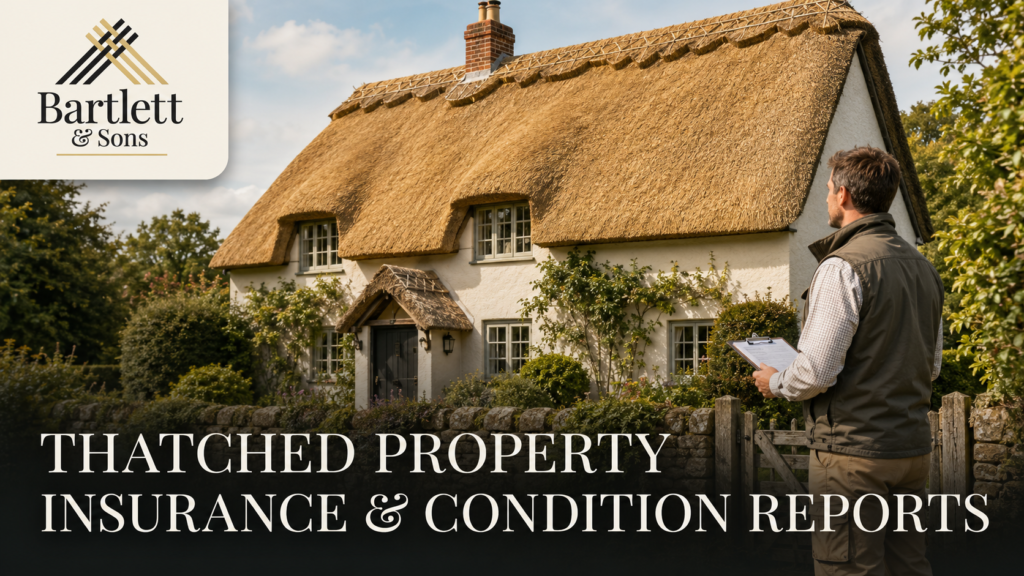
A thatched property offers distinctive character, traditional craftsmanship and an important connection to Britain’s architectural heritage. However, insuring a thatched cottage can be more complicated than arranging cover for a conventionally roofed home.
Insurers may require detailed information about the roof, chimney, electrical system, fire precautions and general condition of the building before offering cover. If the information supplied is incomplete, homeowners may receive limited options, higher premiums or requests for further inspections.
A professional thatched property insurance and condition report provides insurers with a clearer understanding of the building and its potential risks. At Bartlett & Sons, our family-run business works with homeowners and insurers to prepare comprehensive reports that can remain valid for up to five years, subject to the insurer’s requirements and any significant changes to the property.
Why Is Thatched Property Insurance Different?
Thatched roofs are constructed from natural materials such as water reed, combed wheat reed or long straw. When properly installed and maintained, a thatched roof can provide effective protection for many years. Nevertheless, insurers assess these properties differently because their construction, repair requirements and fire considerations differ from those of tiled or slated buildings.
Factors that may influence a thatched home insurance quotation include:
- The age and condition of the thatch
- The type of thatching material used
- The depth and overall construction of the roof
- The date of the most recent rethatch or repair
- The condition and height of the chimney
- The presence of a wood-burning stove or open fire
- The electrical installation within the property
- Fire prevention and detection measures
- The distance from neighbouring buildings
- Access for emergency services
- Nearby trees and overhanging branches
- The property’s listed or conservation status
Providing accurate information about these areas allows an insurer to evaluate the property more fairly and offer cover based on its actual condition.
What Is a Thatched Property Condition Report?
A thatched property condition report is a detailed assessment of the roof and other relevant features of the home. It records the visible condition of the property at the time of inspection and highlights maintenance issues that may affect insurability.
The report is not simply a brief statement confirming that a roof is thatched. It gives the insurer structured information supported by professional observations and, where appropriate, photographs.
The assessment may consider:
- The type and apparent age of the thatch
- The condition of ridges, eaves and valleys
- Signs of wear, thinning or displacement
- Moss, vegetation or biological growth
- Damage caused by birds, animals or weather
- Previous repairs and patching
- Chimney condition and clearance above the roof
- Flashings around chimney stacks
- Visible fire safety measures
- Surrounding trees and external hazards
- General maintenance requirements
The exact scope may vary according to the property and the insurer requesting the information.
How Can a Report Help with Insurance?
Specialist insurers need enough evidence to understand the condition of a thatched property. Without a suitable report, they may have to make cautious assumptions about its risk.
A comprehensive condition report can help by:
- Providing reliable information about the roof
- Identifying the thatching material and construction
- Recording visible defects and maintenance needs
- Demonstrating that the property has been professionally assessed
- Helping the homeowner answer technical insurance questions
- Reducing delays caused by requests for further information
- Supporting discussions with specialist insurance providers
- Creating a useful record of the property’s condition
A report cannot guarantee that a particular insurer will offer cover or provide the lowest premium. Each provider applies its own underwriting rules. However, clear and accurate evidence can help insurers prepare a quotation based on better information.
What Is Checked During the Inspection?
The inspection generally begins with an external examination of the roof. The surveyor considers the condition of the thatch across different elevations because one side may experience more weather exposure than another.
Ridges are checked for deterioration, movement and visible weakness. Eaves, verges, valleys and junctions are also important because water penetration may occur where materials meet or drainage is restricted.
The inspection may look for signs such as:
- Uneven or hollow areas in the roof covering
- Exposed fixings or underlying materials
- Loose ridging or damaged decorative work
- Deep channels caused by rainwater
- Persistent moss or lichen growth
- Bird or vermin damage
- Deteriorated wire netting
- Poorly completed previous repairs
- Defective leadwork or flashing
- Evidence of moisture entering the property
Where access permits, relevant internal roof areas may also be considered. The report will explain any access limitations so that the insurer understands which parts of the property were visible.
Why Is the Chimney Important?
The chimney is a significant consideration in any thatched property assessment. Heat, sparks and deposits from a chimney can create additional risk if the structure is defective or inadequately maintained.
An inspection may consider the chimney’s visible condition, its position within the roof and its clearance above the thatch. Cracked masonry, deteriorated pointing, damaged pots and defective flashing may require attention.
Homeowners should arrange regular sweeping by a suitably experienced chimney professional and follow appropriate guidance for any stove, fireplace or heating appliance. Changes to a chimney or appliance should be completed by qualified specialists and disclosed to the insurer where required.
Fire Safety in a Thatched Home
Good fire precautions can help protect the occupants and the building. Insurers may ask about smoke alarms, fire extinguishers, electrical testing, chimney maintenance and the use of solid-fuel appliances.
Practical measures may include:
- Installing suitable smoke and heat alarms
- Testing alarms regularly
- Keeping fire extinguishers in appropriate locations
- Sweeping chimneys at recommended intervals
- Burning properly seasoned fuel
- Avoiding excessively hot chimney fires
- Maintaining safe electrical installations
- Keeping bonfires and barbecues away from the building
- Preventing branches from touching or overhanging the roof
- Ensuring the property has an accessible water supply where possible
The precautions required will depend on the building and the insurer. A condition report can document visible measures, but homeowners remain responsible for ongoing safety and maintenance.
Common Problems Found in Thatched Roofs
Not every defect means that a complete rethatch is necessary. Localised repairs may be sufficient where the main roof covering remains serviceable.
Common concerns include worn ridges, thin areas, damaged eaves, moss growth, bird damage and deteriorated flashing. Poor drainage or nearby trees may keep sections of the roof damp, accelerating wear.
Addressing minor defects early can help prevent water penetration and protect the supporting roof structure. Delaying maintenance may allow a relatively small problem to become more extensive and expensive.
A professional report helps distinguish between routine maintenance, localised repair and more substantial work.
How Long Does a Condition Report Last?
Bartlett & Sons aims to provide a comprehensive report that can last for up to five years. The period accepted will depend on the individual insurer and whether the condition of the property changes.
A new report or additional inspection may be required if:
- The roof is repaired or rethatched
- Storm or fire damage occurs
- A new stove or chimney system is installed
- Structural alterations are completed
- Significant deterioration becomes visible
- The insurance provider requests updated information
Homeowners should not treat the report as a replacement for regular roof checks. The condition of natural thatching materials can change through weather exposure, accidental damage and general ageing.
Preparing for a Thatched Property Inspection
Before the appointment, gather any available records relating to previous thatching, repairs, chimney sweeping, electrical inspections and fire precautions. These documents may provide useful background information.
Ensure that safe access is available to relevant areas and inform the surveyor about known leaks, repairs or insurance concerns. Accurate disclosure helps produce a more useful report and avoids important information being overlooked.
Arrange a Thatched Property Insurance Report
Obtaining suitable insurance for a thatched home begins with providing insurers with clear and dependable information. A professional condition report can document the roof’s construction, current condition, visible risks and maintenance requirements in a format that supports the quotation process.
At Bartlett & Sons, our family-run business has experience working with insurers and owners of thatched cottages. We provide in-depth thatched property insurance and condition reports designed to help you approach insurers with confidence and secure appropriate cover for your home.
Contact Bartlett & Sons today to arrange an inspection and learn more about obtaining a comprehensive condition report for your thatched property.

